
Filling and capping
ROPP capping machines
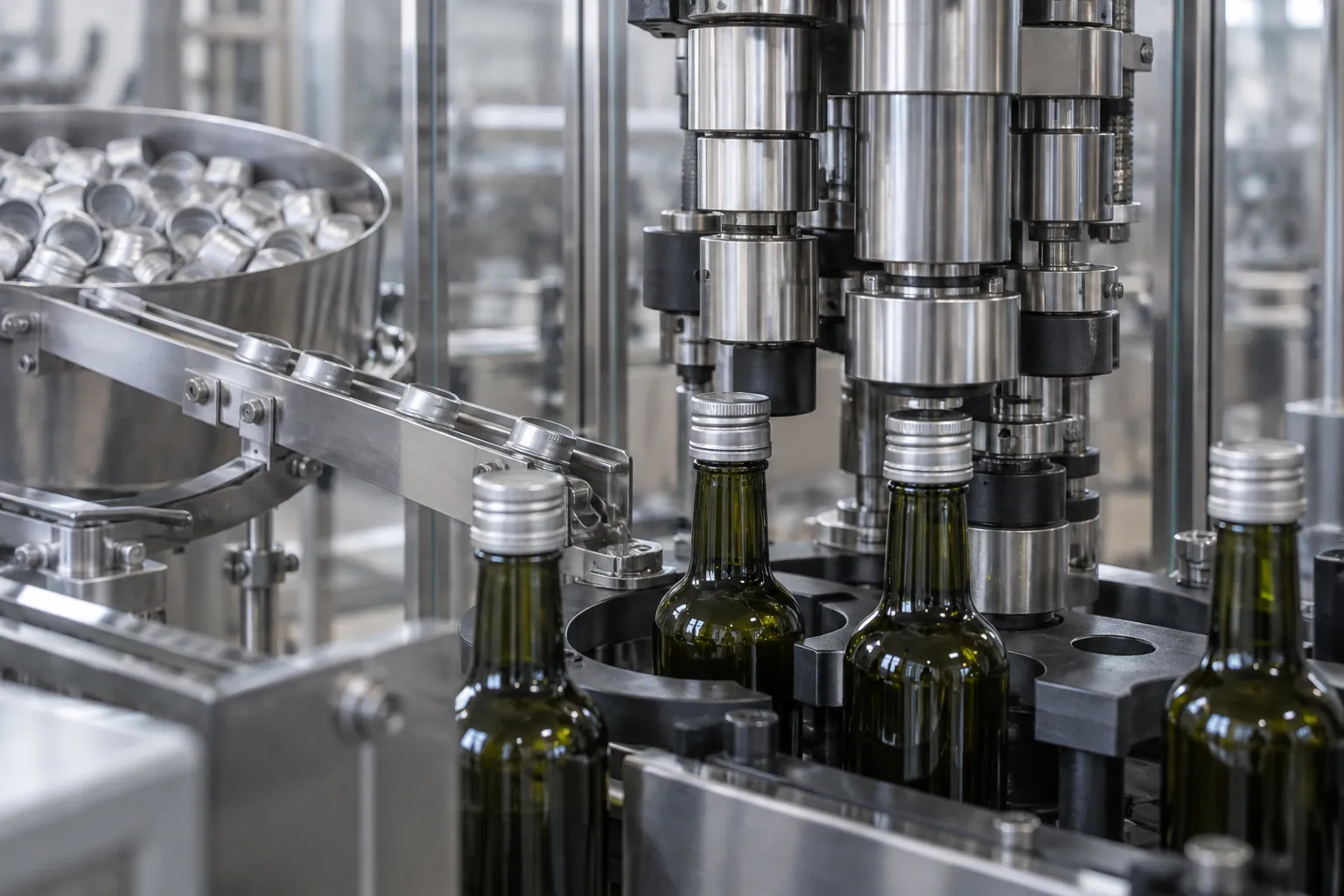
ROPP (roll-on pilfer-proof) caps start as plain aluminum shells. Rollers form the thread and tamper-evident band onto the bottle neck. We evaluate the roll-on capping solution with you, based on cap size, bottle neck and line speed.
Typical applications
- Beverage bottles
- Olive oil and edible oil bottles
- Vinegar and sauce bottles
- Syrup and healthcare product bottles
- Cologne and cosmetic bottles
What we evaluate in your project
- Cap diameter, height and aluminum thickness
- Bottle neck dimensions and thread profile
- Tamper-evident band and sealing requirements
- Cap feeding and placement method
- Speed matching and bottle transfer after filling
Solution options by application
Single-head roll-on capping
A straightforward option we evaluate for lower-speed lines and for applications that run several bottle formats.
Multi-head rotary roll-on capping
Several capping heads work on a rotary turret; this layout is evaluated for lines that need a continuous flow.
Cap feeding and placement
A feeding unit orients the aluminum caps and places them on the bottle neck; it is selected by cap size and line speed.
Line integration
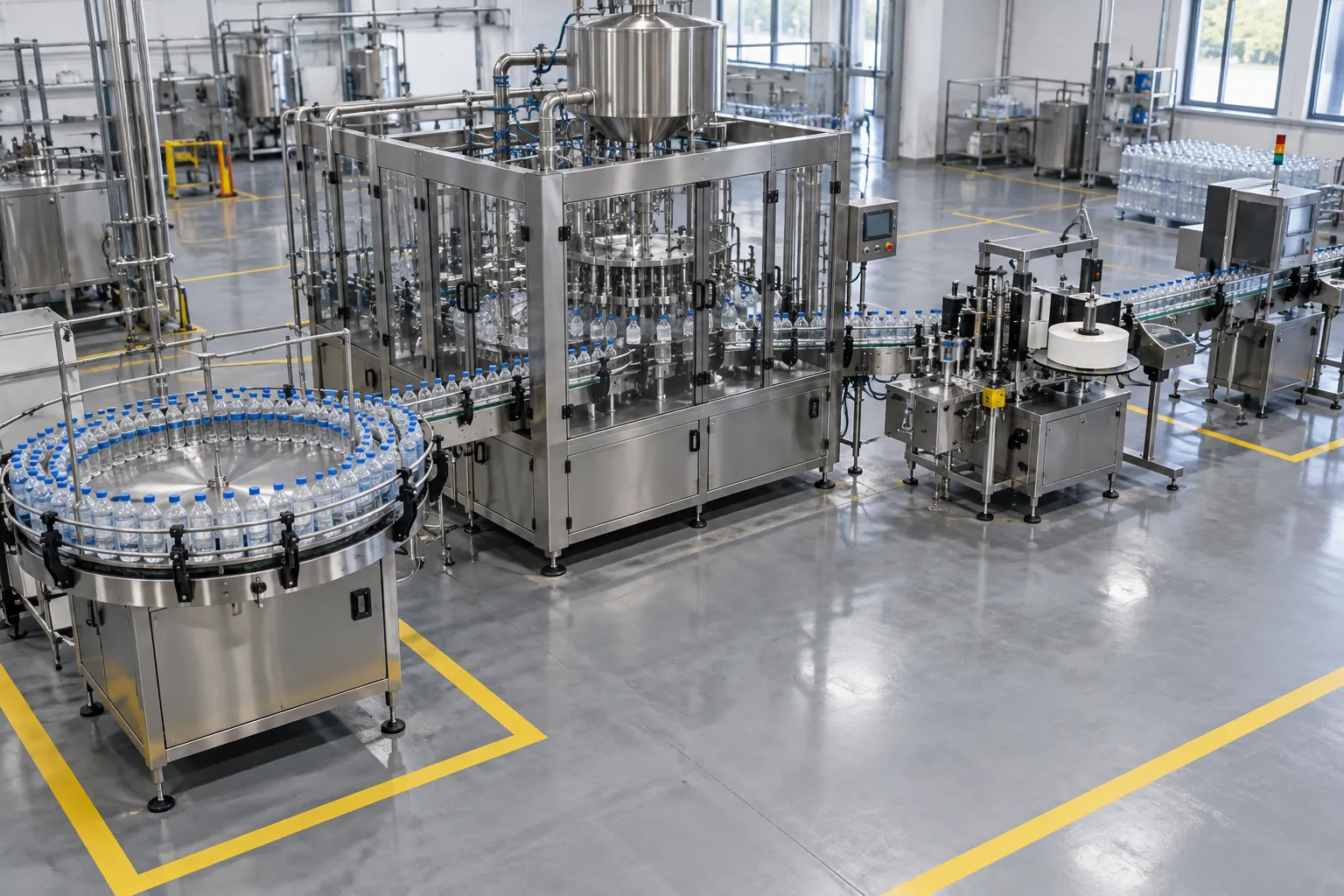
The ROPP capper is placed after the filler and receives filled bottles by conveyor or starwheel transfer. Capped bottles then move on to labeling. Change parts such as starwheels, guides and centering bells are planned with the line for each bottle size.
Related machine groups
Capacity and technical values are defined during the quotation process, based on your product, packaging and goals.
Quotes and project support
Request a quote for this machine group
Share your product, container dimensions and output target, and we will review suitable options with you.