
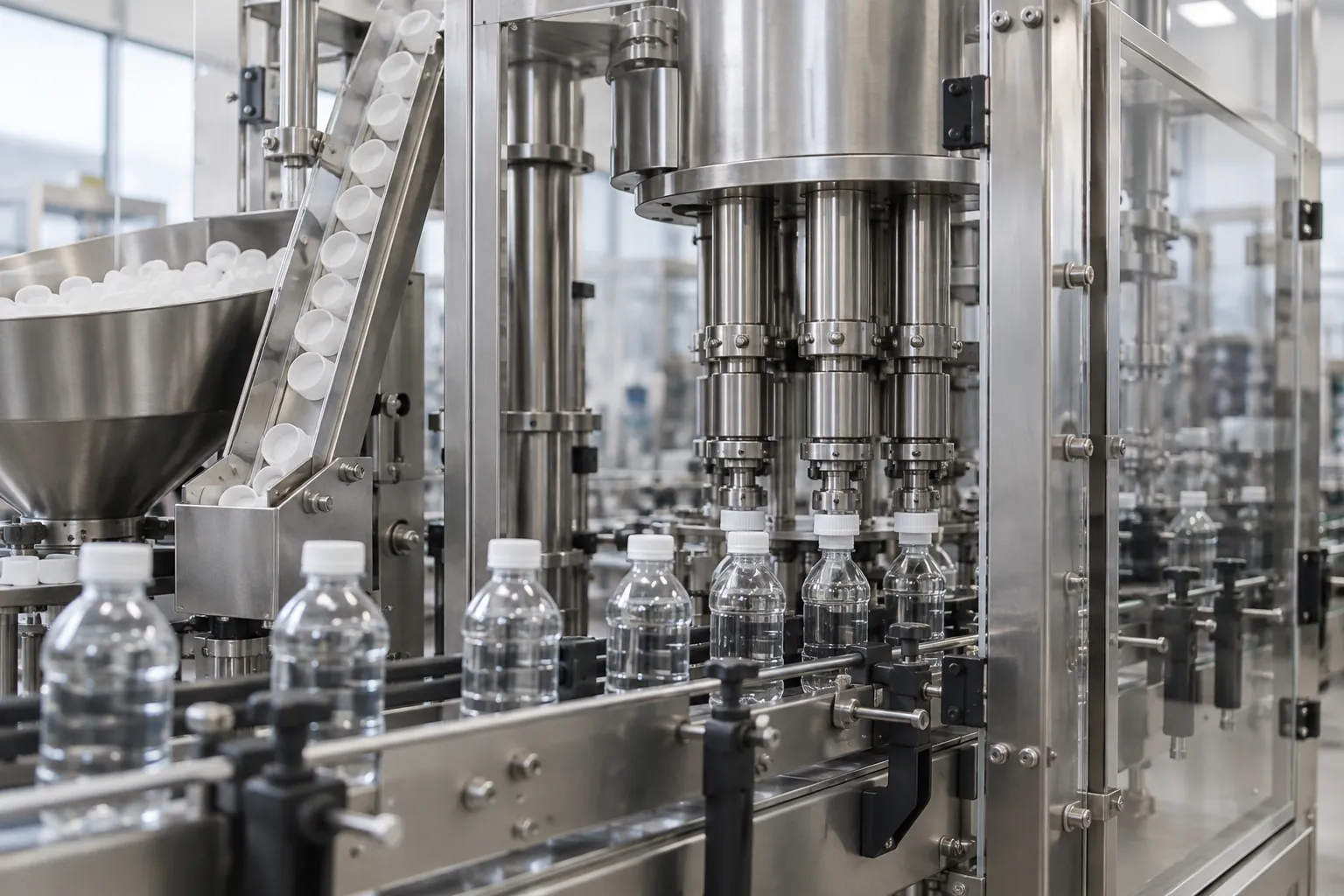
Filling and capping
Capping machines
Capping plays a key role in protecting the product and keeping the container sealed. We evaluate screw or press-on capping options with you, based on your cap type, container neck and line speed.
Typical applications
- PET and glass bottles
- Jars
- Cosmetic and personal care containers
- Cleaning product bottles and jugs
- Chemical and industrial product containers
What we evaluate in your project
- Cap type, size and material
- Container neck finish and thread profile
- Required tightening torque or press-on force
- Cap feeding and orientation method
- Speed and layout fit with the filler
Solution options by application
Screw capping
Screw caps are turned onto the container neck and tightened to a set torque; a common method for bottles and jars.
Press-on capping
Snap-on and press-on caps are pressed onto the container neck; the pressing method is chosen to suit the cap design.
Cap feeding unit
A cap feeder orients the caps and delivers them steadily to the capping point; it is selected to suit the cap type and line speed.
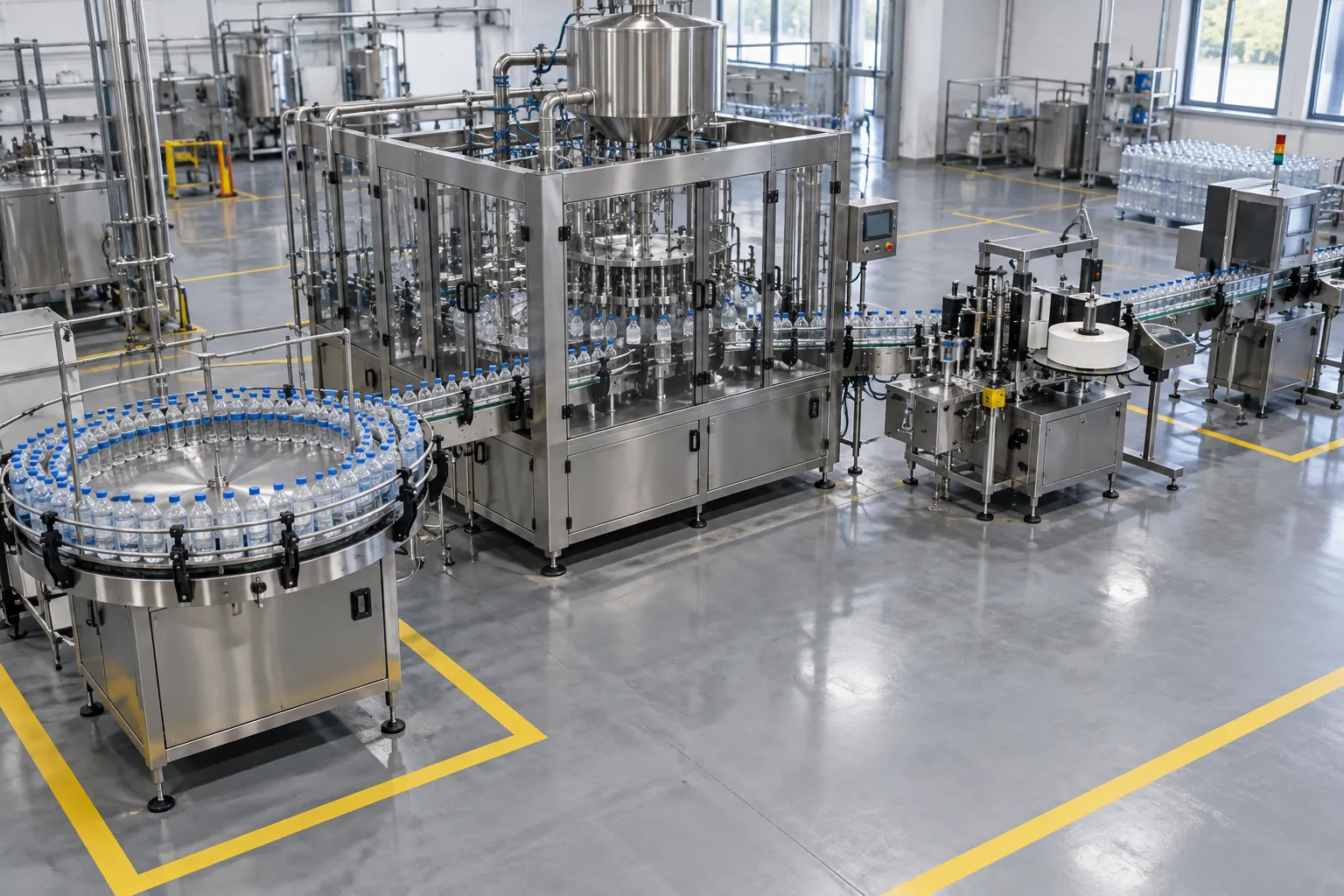
Line integration
The capper usually sits directly after the filler. Filled containers arrive by conveyor while caps come from the cap feeder. Capped containers then move on to labeling, and starwheels, guides and feed screws are planned for each container size.
Related machine groups
Capacity and technical values are defined during the quotation process, based on your product, packaging and goals.
Quotes and project support
Request a quote for this machine group
Share your product, container dimensions and output target, and we will review suitable options with you.